How to Build a Podcast Guest One-Sheet
What belongs on a podcast guest one-sheet, what to leave off, how to host it, and the honest limit on what the document can do for your bookings.
Research this article with AI
Follow Convokast on Google
Add Convokast to your Preferred Sources.
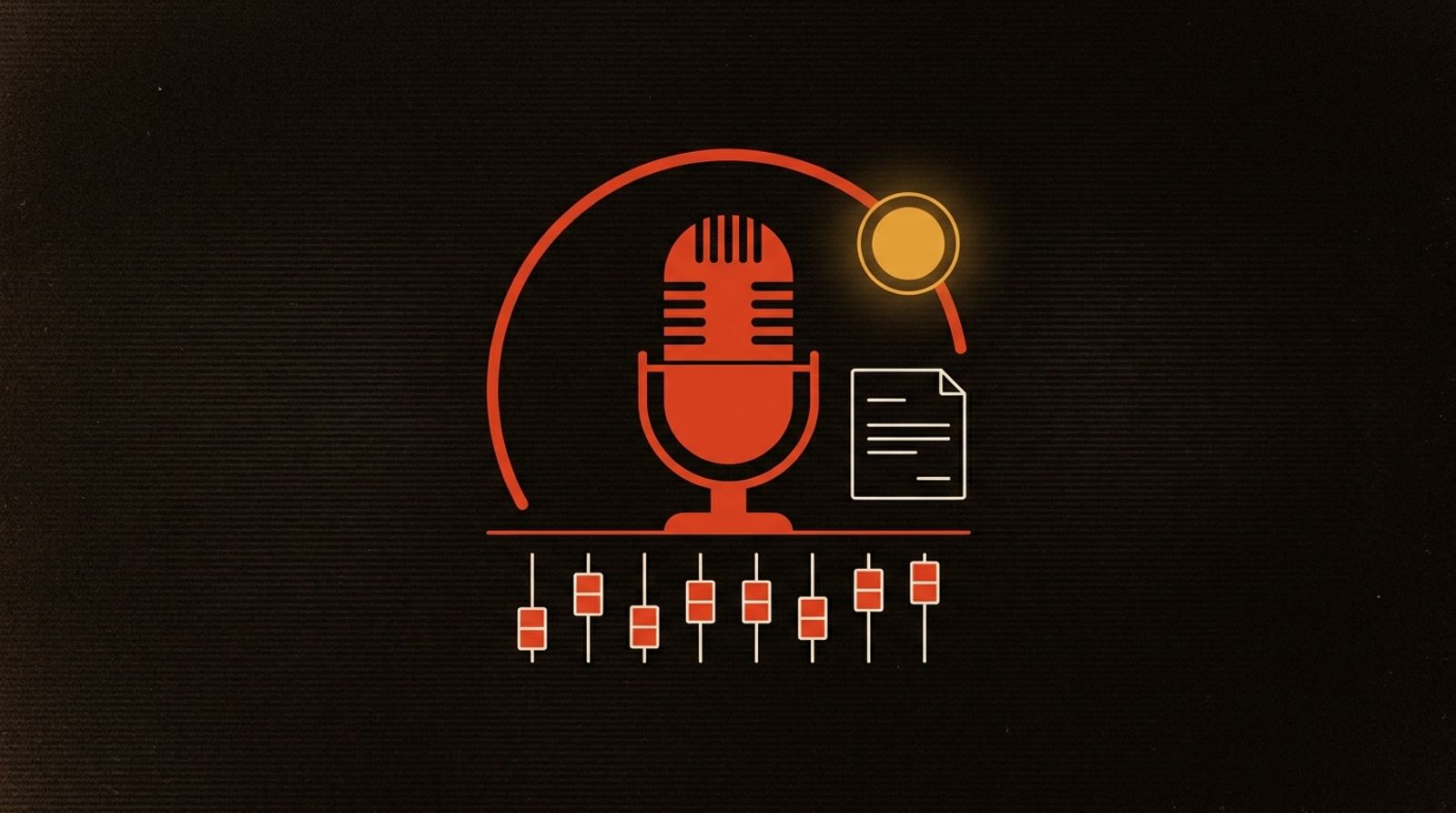
A podcast guest one-sheet is a single page giving a host everything they need to evaluate you and prepare an episode: a short bio, two or three concrete episode angles with sample questions, a headshot, links to past appearances and a contact route. Fits on one screen, no login, no download.
Worth being clear about what it does. A one-sheet does not win bookings. The pitch angle does that. What the one-sheet does is remove every reason for a host to delay once they are already interested, which is a smaller job that still matters.
What goes on the page
Six elements, in roughly this order.
Name, role and one line of context. Who you are and why the subject is yours. "Head of engineering at a 60-person logistics platform, previously ran infrastructure at two hardware startups" tells a host more than a job title alone.
A short bio, 60 to 100 words. Written in third person so a host can read it out as an introduction without editing. This is the piece most often overwritten, and length is the usual failure. Writing the bio itself has more on getting it to that length without hollowing it out.
Two or three episode angles. Not topics. Each one stated as a claim or tension, with three or four sample questions underneath. This is the most valuable section on the page and the one most one-sheets get wrong, because it is where a host's preparation time actually goes.
A headshot. A recent, well-lit photo at a resolution a show can put on an episode graphic. It does not need to be a studio portrait. It does need to be a file the host can use without asking you for a better one.
Two or three past appearances. Links to episodes, talks or recorded panels. These let a host hear how you speak, which is what they are really assessing. If you have none, say so and link written work instead. A one-sheet claiming appearances that do not exist is worse than an honest blank.
Contact and logistics. Email, timezone, and the recording setup you use. That last item saves an email exchange on every booking.
What to leave off
Your company pitch. A product description on a guest one-sheet reframes the whole page as a sales document. Context about what your company does is fine in the bio line. A value proposition is not.
Audience or reach numbers you cannot support. Inflated follower counts and vague "reaches 50,000 professionals" claims are easy to check and expensive to be caught on. Leave the section out entirely rather than padding it.
A long list of topics. Ten topics reads as "I have not decided what I am good at." Two or three sharp ones read as someone who knows their material.
Testimonials about you as a guest, unless a host actually said them and you have permission. Manufactured praise on a page a host is using to assess credibility is a poor gamble.
Downloadable PDFs as the only format. Covered below.
Format and hosting
Host it as a web page at a stable URL. A host should be able to click once and read it, on a phone, without downloading anything.
PDFs are common here and they are the weaker choice. They open in a separate viewer, they render badly on mobile, they cannot be updated after you send them, and attaching one to a cold email hurts deliverability. Offer a PDF as a secondary option if you like, but the link should be the primary.
Keep the URL stable and memorable. Producers save these and come back months later.
Update it whenever your role changes, and refresh the past-appearances links roughly every six months so the top of the list is recent. A one-sheet listing a role you left two years ago actively works against you.
The one-sheet builder produces this structure as a page if you would rather not build one from scratch.
Getting the episode angles right
This section carries the page, so it deserves most of the effort.
For each angle, write the claim in one sentence, then three or four questions a host could ask you. The questions do two things. They show the host that a real conversation exists inside the angle, and they save the producer the prep work of inventing them.
| Weak entry | Strong entry |
|---|---|
| Topic: "Scaling teams" | "Why the first specialist hire breaks a process built for generalists" |
| Topic: "Pricing" | "What changed when we moved from seats to usage, including what we got wrong" |
| Topic: "Remote work" | "Async writing as a management cost shift rather than a culture change" |
Sample questions under the strong entries write themselves, because a claim implies interrogation. Sample questions under "scaling teams" have to be invented from nothing, which is exactly the work you are trying to save the host.
Keep the angles aligned with what you actually pitch. A one-sheet advertising three angles you never send is a page describing a different guest.
When a one-sheet earns its keep
It matters most in three situations.
When a host has replied with interest and needs to check you before committing. A producer assembling a schedule can pull your bio, photo and topics without another email round trip. Shows with a formal submission process often ask for exactly this material.
It matters least on a first cold pitch, where the angle is doing all the work and the link is optional. Include it as a single line at the end, and never make the host open it to find out what the episode would be. The pitch email has to stand alone.
The honest limit
An hour on a one-sheet is well spent. Six hours is not, and plenty of people spend the six because building an asset feels more comfortable than sending pitches to strangers.
If the choice is between a polished one-sheet and fifteen researched shows contacted this week, take the fifteen shows. The document is a support asset. Nothing on it substitutes for a relevant idea reaching a suitable programme.
Where to take this next
Build the page in about an hour with the one-sheet builder, then leave it alone and spend the rest of the week on target selection.
If you would rather have the positioning, the angles and the target list built with you and pitched for you, Convokast does that for $499 a month, with at least one guaranteed interview a month and your approval on every show before it is pitched.
Common questions
What is a podcast guest one-sheet?
A podcast guest one-sheet is a single page that gives a host everything they need to evaluate and prepare for you: a short bio, two or three episode topics with sample questions, a headshot, links to past appearances and how to reach you. It supports a pitch rather than replacing it.
What should a podcast one-sheet include?
A short bio of 60 to 100 words, two or three specific episode angles with three or four sample questions each, a usable headshot, links to two or three past appearances or talks, and contact details. Everything else is optional and usually makes the page harder to scan.
Do you need a one-sheet to get booked on podcasts?
No. Bookings come from a relevant episode angle sent to a suitable show. A one-sheet removes friction once a host is already interested, and it makes you easier to say yes to, but it does not create interest that the pitch failed to create.
Keep reading

Is Podcast Guesting Worth It for Manufacturing Leaders?
A fit test for manufacturing and industrial leaders: the three conditions that have to hold before podcast guesting is worth the time, and who should skip it.
Read more
Podcast Interview Topics for Health and Wellness Founders
Topic angles for supplement, device, app, clinic and practitioner-training founders that a host can actually run, built on mechanism, adherence and evidence quality instead of on what the product does for a customer.
Read more
Is Podcast Guesting Worth It for Health and Wellness Founders?
A decision guide for founders of supplement brands, wellness apps, clinics and practitioner training businesses. The deciding factor is whether you can talk about your category for an hour without making a claim you cannot support.
Read moreWork with us
Want to be the guest, not the reader?
We pitch, book, and prep you for the shows your buyers already listen to.
Free 20-minute call. If we are not a fit, we will say so.